
This article was written from an interview by the Mission Network News. You can read it here, or you can read it and/or listen to the audio on their website here.
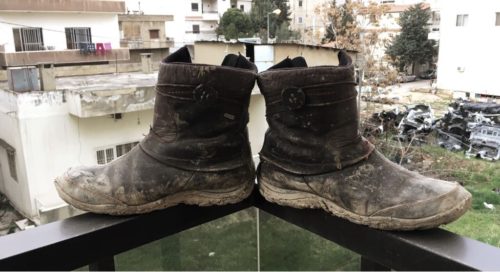 Lebanon (MNN) — The Syrian refugee camps in Lebanon are dusty part of the year and muddy the rest. It doesn’t matter if gravel is put down, or the fact that tents are on concrete slabs. If you go into a camp, you’re going to come out marked.
“I have this certain pair of boots that I wear to camp that are great. I’ve worn them so much in camp that they, I can’t clean them. I have washed them. I have tried to clean them and it’s just, the dirt’s permeated to them that they just are dirty and I track it everywhere and I go everywhere,” Triumphant Mercy’s *Jessica shares.
“And I’ve noticed that whenever I go into Lebanese stores, the grocery store, the bank, or a restaurant or somewhere with the boots, then Lebanese look down at my feet, they see my dirty boots, and they know that I’ve work in the refugee camps.”
The immediate response—why? Why pour your time into helping Syrian refugees?
Enter the long history between Lebanon and Syria, and the most recent war. There’s deep rooted tension built up on both sides, and it’s caused a division. Lebanon was under Syrian occupation for 29 years.
In 1976, Syria entered Lebanon during the Lebanese civil war. Syria’s presence in the country was meant to be a part of an Arab peacekeeping plan. With that said, things didn’t exactly go as planned. When it was time for Syria to withdraw over a two-year period, the country kept its presence in Lebanon another 15 years. Finally, in 2005 Syria left Lebanon.
http://www.nytimes.com/2005/04/26/international/middleeast/syrian-troops-leave-lebanon-after-29year-occupation.html?mtrref=www.google.com
Fast forward six years to the Syrian civil war in 2011 and the Syrian refugee crisis which quickly followed. Lebanon then faced another Syrian occupation of sorts, this time not by the government, but by hurting people.
Hannah, who lives in Lebanon but works with Syrians, comes face to face with the tensions between the Syrians and Lebanese every day. For some Lebanese, it’s not hard to rationalize that the Syrians are getting what they deserve or they’re getting what they had coming to them. After all, many of them still have their own wounds which need healing.
“Now the Lebanese see foreign NGOs and different countries pouring in resources to the refugees, the Syrians. And that has taken away from the Lebanese economy and for jobs. It has made the poor poorer,” *Jessica explains.
“Because such a huge influx of refugees has come that it’s been a huge burden on Lebanon and whenever foreigners come in and start pouring resources into something that’s been a huge burden on them they see it as so unfair because the Syrians are draining from them…they don’t see it as much as relieving pressure off of them, but kind of adding to the problem I think.”
In fact, when various Lebanese have confronted *Jessica about working with refugees, they’ve told her working with the Syrians isn’t good. If it’s not good, then why do it?
How does one even begin and answer? Where does a response to the “why” questions concerning helping Syrian refugees in Lebanon begin to from? With and through grace.
“I explain to them that each person is valuable…and each person is worthy. That the Syrians are disadvantaged, so many of the kids and so many of the women and so many of the families don’t have an opportunity in life,” *Jessica explains.
“And then I explain to them that I’m a Christian and that Jesus saved me. He saw me as valuable and he poured out his love for me and he saw me as worthy. When I came to that realization it changed everything in my life. And that I can’t see a distinction between people. If Jesus did that for me, then he did that for the Lebanese. And if he did it for the Lebanese, he did it for the Syrians…you can’t take a people group out of that.”
Hannah’s become known by her boots. Now, when she enters the grocer or another place she habitually visits, if she’s not wearing her boots she’s asked, ‘Where are your boots?”
And every time she is asked about her dirty boots, whether they’re on her feet or not, it’s an invitation to share Christ, proclaim that Jesus loves both the Lebanese and the Syrian, and express how each Lebanese and Syrian are worth the price of the cross.
“At the end of the day, I just say, well I think people are worthy to be loved and I think that Jesus loves people. He changed my life. He can change their lives, and I think that they are valuable,” *Jessica shares“But, I also point it back to them and say, if they are valuable and you are valuable too, and you are loved too. And in the same way that I am pouring out my life for them, I would pour out my life for you…my life is to be poured out that the love of Jesus might be known.”
So please, pray for both the Lebanese and the Syrian. Pray for refugees’ eyes to be opened to the Bibles truth, that they’d realized Christ’s love, and that they’d have the courage to walk towards that love and truth.
For many refugees, believing in Christ means every foundation they’ve built their life and values on crumbles. It’s an entire worldview shift and different way of thinking. That gigantic shift can be scary, but then, their lives and values can be built on Christ, the true rock and foundation.
Pray for the relationship between the Lebanese and Syrians, their reconciliation, and for Jesus to enter the hearts of both nations. Ask God to heal the Lebanese and for these same people to come to a place where they can let go of their prejudices towards the Syrian people.
Lebanon (MNN) — The Syrian refugee camps in Lebanon are dusty part of the year and muddy the rest. It doesn’t matter if gravel is put down, or the fact that tents are on concrete slabs. If you go into a camp, you’re going to come out marked.
“I have this certain pair of boots that I wear to camp that are great. I’ve worn them so much in camp that they, I can’t clean them. I have washed them. I have tried to clean them and it’s just, the dirt’s permeated to them that they just are dirty and I track it everywhere and I go everywhere,” Triumphant Mercy’s *Jessica shares.
“And I’ve noticed that whenever I go into Lebanese stores, the grocery store, the bank, or a restaurant or somewhere with the boots, then Lebanese look down at my feet, they see my dirty boots, and they know that I’ve work in the refugee camps.”
The immediate response—why? Why pour your time into helping Syrian refugees?
Enter the long history between Lebanon and Syria, and the most recent war. There’s deep rooted tension built up on both sides, and it’s caused a division. Lebanon was under Syrian occupation for 29 years.
In 1976, Syria entered Lebanon during the Lebanese civil war. Syria’s presence in the country was meant to be a part of an Arab peacekeeping plan. With that said, things didn’t exactly go as planned. When it was time for Syria to withdraw over a two-year period, the country kept its presence in Lebanon another 15 years. Finally, in 2005 Syria left Lebanon.
http://www.nytimes.com/2005/04/26/international/middleeast/syrian-troops-leave-lebanon-after-29year-occupation.html?mtrref=www.google.com
Fast forward six years to the Syrian civil war in 2011 and the Syrian refugee crisis which quickly followed. Lebanon then faced another Syrian occupation of sorts, this time not by the government, but by hurting people.
Hannah, who lives in Lebanon but works with Syrians, comes face to face with the tensions between the Syrians and Lebanese every day. For some Lebanese, it’s not hard to rationalize that the Syrians are getting what they deserve or they’re getting what they had coming to them. After all, many of them still have their own wounds which need healing.
“Now the Lebanese see foreign NGOs and different countries pouring in resources to the refugees, the Syrians. And that has taken away from the Lebanese economy and for jobs. It has made the poor poorer,” *Jessica explains.
“Because such a huge influx of refugees has come that it’s been a huge burden on Lebanon and whenever foreigners come in and start pouring resources into something that’s been a huge burden on them they see it as so unfair because the Syrians are draining from them…they don’t see it as much as relieving pressure off of them, but kind of adding to the problem I think.”
In fact, when various Lebanese have confronted *Jessica about working with refugees, they’ve told her working with the Syrians isn’t good. If it’s not good, then why do it?
How does one even begin and answer? Where does a response to the “why” questions concerning helping Syrian refugees in Lebanon begin to from? With and through grace.
“I explain to them that each person is valuable…and each person is worthy. That the Syrians are disadvantaged, so many of the kids and so many of the women and so many of the families don’t have an opportunity in life,” *Jessica explains.
“And then I explain to them that I’m a Christian and that Jesus saved me. He saw me as valuable and he poured out his love for me and he saw me as worthy. When I came to that realization it changed everything in my life. And that I can’t see a distinction between people. If Jesus did that for me, then he did that for the Lebanese. And if he did it for the Lebanese, he did it for the Syrians…you can’t take a people group out of that.”
Hannah’s become known by her boots. Now, when she enters the grocer or another place she habitually visits, if she’s not wearing her boots she’s asked, ‘Where are your boots?”
And every time she is asked about her dirty boots, whether they’re on her feet or not, it’s an invitation to share Christ, proclaim that Jesus loves both the Lebanese and the Syrian, and express how each Lebanese and Syrian are worth the price of the cross.
“At the end of the day, I just say, well I think people are worthy to be loved and I think that Jesus loves people. He changed my life. He can change their lives, and I think that they are valuable,” *Jessica shares“But, I also point it back to them and say, if they are valuable and you are valuable too, and you are loved too. And in the same way that I am pouring out my life for them, I would pour out my life for you…my life is to be poured out that the love of Jesus might be known.”
So please, pray for both the Lebanese and the Syrian. Pray for refugees’ eyes to be opened to the Bibles truth, that they’d realized Christ’s love, and that they’d have the courage to walk towards that love and truth.
For many refugees, believing in Christ means every foundation they’ve built their life and values on crumbles. It’s an entire worldview shift and different way of thinking. That gigantic shift can be scary, but then, their lives and values can be built on Christ, the true rock and foundation.
Pray for the relationship between the Lebanese and Syrians, their reconciliation, and for Jesus to enter the hearts of both nations. Ask God to heal the Lebanese and for these same people to come to a place where they can let go of their prejudices towards the Syrian people.
0
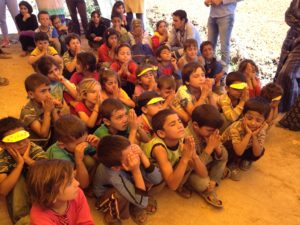 Lebanon (MNN) – Is there really power in prayer? Triumphant Mercy is working with and prays for refugees in Lebanon and they say yes.
“It’s amazing how God just turns hearts,” Triumphant Mercy’s Nuna says.
“This is our prayer actually. We pray for that. We pray that hearts would be opened because it cannot be us. It’s not us who can do it. We have to open hearts and give a revelation of the Father, give a revelation of who Jesus is, and we cannot reveal anything. We can just do the act, but the revelation in the heart cannot be done by us. We need the Holy Spirit every day.”
Triumphant Mercy workers have shown love to refugees by providing food and supplies and building relationships.
The ministry recently took refugee women to a park. Nuna says it cost very little, but the women were full of joy.
“Bringing joy is something that is a privilege. Seeing that we can bring joy with anything, which is a small act of love. And I think this is what it is. It’s just loving people. It’s just showing people that we care.”
Recently, Nuna says God sent the ministry a volunteer who only wanted to distribute food. She says she hadn’t expected this, but “I believe God really knows the need and just brings them at the right time in the right place.”
While many aid organizations have given food, Nuna says Triumphant Mercy doesn’t give refugees food and leave. Instead, they stay or come back so they can build relationships.
They work and live alongside refugees. Because of this, they’re seeing people’s hearts opening to the Word of God. They’re seeing hope and encouragement that is taking root.
“This is amazing just to be able to live life with people.” Nuna says ‘living life’ with the people is simply showing them love.
“I just come and smile or offer a prayer. It’s love. So, love has so many different ways of showing, of being displayed. It can be done by just an act, it can be done by thanks, it can be done by a smile.”
These acts of love have stirred the question ‘why’ in refugees’ hearts and minds. Refugees are asking Triumphant Mercy workers why they stay, treat them with love, and want to build relationships with them.
“Just a why can open a wide conversation… because we have something to share because we have somebody in us who is Jesus Christ who wants to love through us. So, we can just share who we have in us,” Nuna says.
“Somebody who has a physical need and we say let’s pray about that. Somebody who has a worry about her, we pray about that. So, it just shows interest and shows we care and shows practically that we’re here.
One of the ways the ministry is enabled to pray for each person is through their health clinic. They offer services to refugees and pray for every patient.
“Every person that comes in the clinic, we pray for them, pray for that God would touch them, or heal them, or do something. And people come, sometimes they really don’t have any physical illness. They just come for the prayer.”
Refugees in Lebanon need your help whether that’s by praying for them, contributing financially, or going to serve alongside them.
Your prayers aren’t empty. They make a difference and these refugees are coveting your prayers of healing and encouragement.
Pray the Lord would continue changing hearts in refugee camps and open doors for Triumphant Mercy to share His Gospel.
Lebanon (MNN) – Is there really power in prayer? Triumphant Mercy is working with and prays for refugees in Lebanon and they say yes.
“It’s amazing how God just turns hearts,” Triumphant Mercy’s Nuna says.
“This is our prayer actually. We pray for that. We pray that hearts would be opened because it cannot be us. It’s not us who can do it. We have to open hearts and give a revelation of the Father, give a revelation of who Jesus is, and we cannot reveal anything. We can just do the act, but the revelation in the heart cannot be done by us. We need the Holy Spirit every day.”
Triumphant Mercy workers have shown love to refugees by providing food and supplies and building relationships.
The ministry recently took refugee women to a park. Nuna says it cost very little, but the women were full of joy.
“Bringing joy is something that is a privilege. Seeing that we can bring joy with anything, which is a small act of love. And I think this is what it is. It’s just loving people. It’s just showing people that we care.”
Recently, Nuna says God sent the ministry a volunteer who only wanted to distribute food. She says she hadn’t expected this, but “I believe God really knows the need and just brings them at the right time in the right place.”
While many aid organizations have given food, Nuna says Triumphant Mercy doesn’t give refugees food and leave. Instead, they stay or come back so they can build relationships.
They work and live alongside refugees. Because of this, they’re seeing people’s hearts opening to the Word of God. They’re seeing hope and encouragement that is taking root.
“This is amazing just to be able to live life with people.” Nuna says ‘living life’ with the people is simply showing them love.
“I just come and smile or offer a prayer. It’s love. So, love has so many different ways of showing, of being displayed. It can be done by just an act, it can be done by thanks, it can be done by a smile.”
These acts of love have stirred the question ‘why’ in refugees’ hearts and minds. Refugees are asking Triumphant Mercy workers why they stay, treat them with love, and want to build relationships with them.
“Just a why can open a wide conversation… because we have something to share because we have somebody in us who is Jesus Christ who wants to love through us. So, we can just share who we have in us,” Nuna says.
“Somebody who has a physical need and we say let’s pray about that. Somebody who has a worry about her, we pray about that. So, it just shows interest and shows we care and shows practically that we’re here.
One of the ways the ministry is enabled to pray for each person is through their health clinic. They offer services to refugees and pray for every patient.
“Every person that comes in the clinic, we pray for them, pray for that God would touch them, or heal them, or do something. And people come, sometimes they really don’t have any physical illness. They just come for the prayer.”
Refugees in Lebanon need your help whether that’s by praying for them, contributing financially, or going to serve alongside them.
Your prayers aren’t empty. They make a difference and these refugees are coveting your prayers of healing and encouragement.
Pray the Lord would continue changing hearts in refugee camps and open doors for Triumphant Mercy to share His Gospel.