
Stories, Stories 2018
This article was written a reporter Tom Orde who came to visit us here in Lebanon. And It is originally published on Medium.com Here you can read in it’s original form.
Tom Orde reports from Lebanon where many refugees have sought safety from the horrors of civil war
A horse rears up on its hind legs and its rider brandishes a sword with a snarl on his face.
He’s a martyr decorating one of the countless banners dotted around the city.
Black flags with white Arabic script line the dusty street like bunting. It’s late October, humid and pushing 30c.
After a few minutes of waiting it’s safe to go inside.
Two blinking toddlers sit opposite me, gibbering and jabbing at each other. They are refugees from Syria.
The house we’re in is in the Fanar neighbourhood of Beirut. It’s a two-room building with hard concrete floors like a factory and the windows shuttered closed. There’s a TV, a sofa and a few recent family photos. Spartan.
Hushed by the two women sat on either side of them the children now sit staring and curious. Iman and Munira are aunt and niece respectively.
They came to Lebanon several years ago and are originally from the Damascan suburb of Ghouta.
A UN report in June described the five-year siege of eastern Ghouta as “barbaric and medieval, amounting to war crimes, and crimes against humanity”.
After leaving Ghouta the family lived in an area of ISIS-held territory where even the young children were forced to cover themselves completely.
I am accompanying Vican and Maral, from an organisation called Triumphant Mercy (TM) on a home visit.
It was founded in 2006 to support Lebanese civilians affected by the Israel–Hezbollah war.
In a true case of turning the other cheek, they started helping Syrian refugees in 2013 despite the lengthy Syrian invasion and occupation of Lebanon from 1976 to 2005.
The women talk and Vican translates for me.
Iman, now 28, suffered severe postnatal depression after having triplets at the age of 14. To escape the Syrian conflict, she and her family made the dangerous mountain crossing to Lebanon. She tells us her brothers are stuck in Idlib where the war still rages.
Here in Lebanon, Iman’s 13-year-old son earns about $2.5 dollars a day doing manual jobs and can’t afford to take days off.
Her husband struggles to find work with a slipped disc and serious back problems. The women have no option but to stay at home and look after their children.
Based out of a community centre, TM makes weekly home visits as a way to maintain regular contact with refugee families stuck at home and to show that there are people there to support them and adapt to life in Lebanon.
This is the third year of contact with Iman who sends her children to the centre.
Set up in 2016, the centre is a hub for the surrounding areas and supports over 1,000 Syrian and Iraqi refugee families.
It offers classes in English, Arabic, maths, art and IT for children aged between 6 and 12 who are unable to access government or UN school provision.
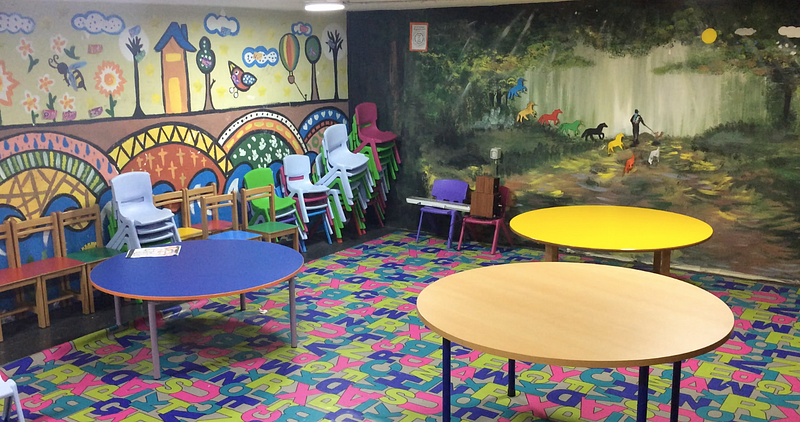
There are opportunities for vocational training and adult education as well as food assistance, rent assistance and monthly clothes distributions.
But they also offer psycho-social (counselling) classes to help those affected by the war process what they have been through and to live a normal life or childhood.
Making our way to the next home our mini-bus jolts along the steep and winding Beirut roads. We pass military checkpoints of machine guns, razor wire, and armoured vehicles.
Lebanese history is complex, to say the least, and demographically the country is a mix of Shia, Sunni, Druze, various sects of Christianity and a sizeable Armenian minority.
The country’s 15-year civil war may have ended almost three decades ago but interfaith tensions still persist to this day.
With a population of just over 4 million people, Lebanon hosts over a million Syrians. This is on top of 450,000 Palestinian refugees already registered with United Nations Relief and Works Agency for Palestine Refugees in the Near East (UNRWA).
According to the UN Refugee Agency, there are 5,637,050 externally placed Syrian refugees, 8,000 of whom have resettled in the UK.
We make our way up cracked concrete steps and again enter spartan settings where we meet two sisters-in-law. Raida and Hadisha.
We’re offered plastic garden chairs while our hosts sit on mildewy cushions on the floor.
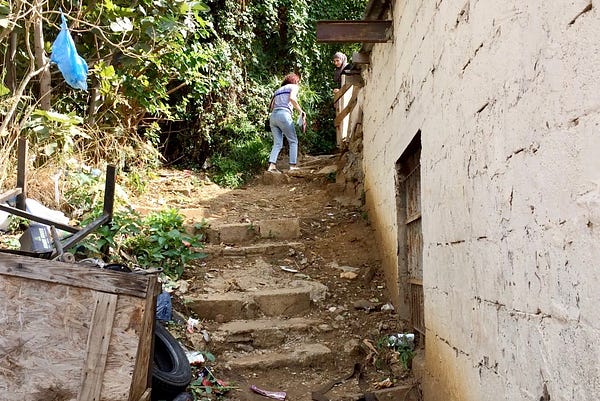
There’s a TV and nothing else.
In total two families live in the house. Raida has two children. One girl and a boy. Hadisha has a girl and a baby on the way. Two of the children attend the TM community centre.
The boy said: “I have three friends at school and I would like to go to Syria someday.”
Raida complains her husband can’t find enough work and is only able to find three days of work a week.
Hadisha suffers from stomach problems and is in her fifth month of pregnancy. She is especially worried as they don’t have money for the hospital fees.
Her brother had cancer but could not afford treatment in Lebanon, by the time he returned to Syria it was too late. He died aged 23.
The two families feel isolated because they don’t know their neighbours. Regardless, Raida says: “It’s better to come to Lebanon. In Lebanon there is UN safety. In Syria, there is nothing [security] especially in the villages.”
So many refugees have gone through horrific experiences during the Syrian conflict and the harsh reality is that despite their circumstances and past traumas these families are the ‘lucky ones’.


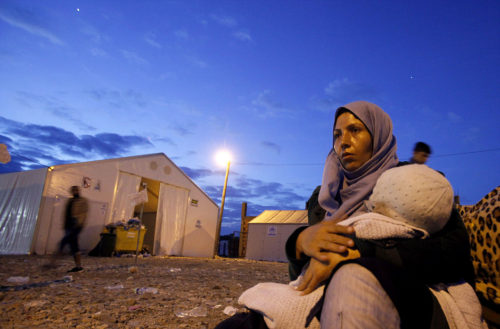
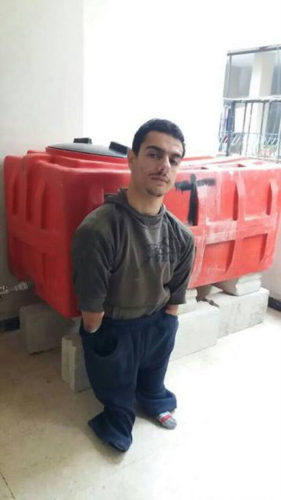
 They looked like a normal family: a man, his wife, and two daughters. Little did I know I’d tear up when they started sharing with me what they went through around six months ago.
Al Nosra attacked their house, took the daughters captive and destroyed the place. It was a traumatic experience to them all. The parents had to find refuge and were terrified for their daughters. Just Imagine losing your children.
Their dad kept searching for them and did not give up. He knew that as usual al Nosra sold Christian girls to Muslim men as sex-slaves and that was taking place every three month, so he grew his beard, shaved his mustache, and dressed just like one of them. When the time of the auction came, he looked just like the men that broke into his house.
The girls were standing in line, blindfolded, shaking, scared. They were just a labeled item to be sold. How inhuman men can become without God. As soon as the auctioneer started, their dad stood up and said he wanted to buy them.
They started shaking even more, knowing what these people can come up to; they could imagine how hopeless their situation was going to be. “SOLD” the auctioneer said.
The guards put the girls in the car, with the piece of cloth still on their eyes. They left. Halfway to their house, their father stops the car, turns around, and removes the piece of cloth. They see their dad. They start weeping. All fear was gone. Their father has paid their redemption and they were restored to their family.
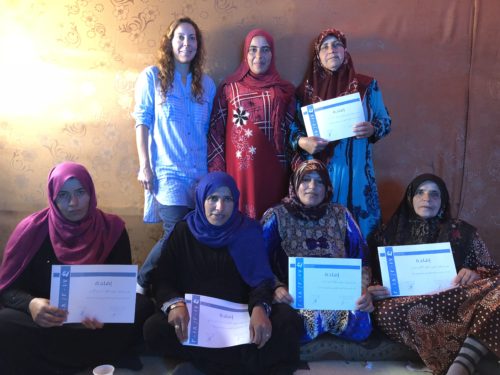
 Over 400 students this year received certificates of completion from the Triumphant Mercy schools in the Beqaa Valley. These students have worked hard and will move up to the next level. We are excited to see the students grow and learn and know that these schools are important to the future of these children. As the time of rest begins we look ahead to the next school year with great anticipation and great expectations.

 As the school year was reaching an end Triumphant Mercy planned school trips for all the kids and teachers at the schools. Six trips were planned to beaches, nature reserves, and springs. It was a great way to come together without the pressures of school and for everyone to enjoy the hard work they did throughout the year.


 For the last five years Triumphant Mercy has helped refugee children in camps near the border with Syria continue their schooling. On the anniversary the director and founder of Triumphant Mercy, Nuna Matar was making one of her routine visits to the camp, and the teachers at the school surprised her with a cake and party. Triumphant Mercy is dedicated to helping Syria by helping these students to continue their education so they can return to Syria and lead their generation in their nation.

 The Camp here in Beirut at our center has been going great! We are just over half way done, with lots of activities and an especially fun treat of tie dye t-shirts for the kids! We are continuing to sing songs, tell stories, play games and even got the chance to go out for ice cream this week! We are sad that the American team that has been here are leaving us, and we have been blessed by their help here, but as they go there are others that want to join the fun also!


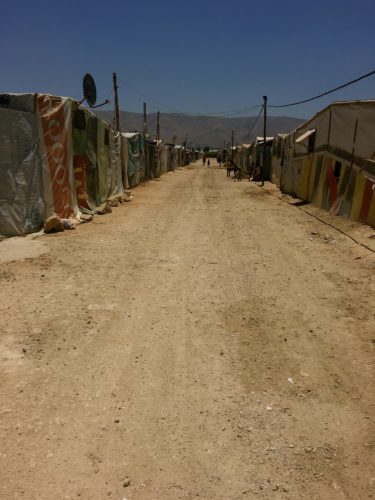 There are currently 28 Syrian refugee teachers at the tent schools we support for refugee children in Lebanon. These people are trained up from within the refugee camps and they not only teach, but are a source of help and advice for parents and the wider community. They are a force for good despite living in a situation completely out of their control.
“The teachers here speak the same dialect of Arabic as their students (often they’re from the same or the neighbouring camp as the children), they get their culture, so nothing gets by them. The teachers are motivated to learn, motivated to be useful, and motivated to be a changing force in their communities.” Nadine – School’s Co-ordinator
The teachers are creating a strong community atmosphere within the settlements and many are looked upon as leaders. These strong relationships between the parents, teachers and other adults in the communities are leading to higher than average attendance and retention rates within the schools. Teachers engage parents in education and to help them to understand the long term benefits for the children.
We’d like to introduce you to four of these teachers, to give you an insight into their work and the amazing things they are achieving.
Halima
Halima is a teacher who has taught with us for two years now, and also works as a trainer. She describes her experience in the tent schools:
“Our work is very focused. We work wholesomely, not just to educate the kids but to help them grow into better, more well rounded people. It’s also been really good to learn how to support our student’s growth in learning not to physically abuse each other, and learning about therapeutic methods to deal with what the kids have seen in war; learning about forgiveness.
I’ve gained so much experience, and this job has encouraged me to grow not just as a teacher but also in my passions. I write stories and songs and poetry and use them to give the children more fun, creative resources to learn. As not just a teacher but also a mother to one of the students, I’m so glad that my son can read and write well, especially when I hear about other schools poor levels of education. I really like that we teach the children to make conclusions instead of pointing everything out to them”.
Mariam
The teachers are regularly observed by our experienced teacher trainer whilst teaching a range of lessons and they receive constructive feedback. They are given time to meet and work with colleagues to plan and evaluate sessions and to share best practice. The class helper is also observed and they receive feedback to ensure they are able to enhance the teaching and learning and the overall classroom environment.
One of the newer teachers from the third school, Mariam said:
“It’s really amazing to see the change in our students compared to what they were like in the very beginning. Initially things were so rowdy, but now that some time has passed, they trust us more, they enjoy school and it’s made things better overall.”
Hala
Hala particularly likes the games and teaching methods used in the classes and the fact that the students have to discover the point of the lesson by themselves which gives them much more enjoyment. She likes that the teachers interact with the children and that the project and craft sessions regularly rotate, keeping the children interested.
“The teaching style brings out the best in the teachers” she explains “it brings out qualities which are hidden in the Syrian teaching system and strengthens the children’s personalities. In this school environment the children have no fear, they are comfortable and talk a lot. They have the courage to speak and play. They are happy in school and they go home happy. I haven’t met a child who doesn’t want to go to school, in fact many don’t want to go home at the end of the day”.
All the teachers are provided with all the materials and resources they need; many they make themselves. Hala enjoys encouraging the children’s creative gifts and feels that through this the children become happy, encouraged and have motivation for life.
“They gain courage to try new things. The children in my class want to be doctors and pilots and some of the girls want to be princesses!” she laughs, “We have some work to do on that one!”.
Omad
Omad finished his university degree in Syria and taught grade 9 science for a year before he had to leave for Lebanon. He has been in Lebanon for over 3 years and had found work in a factory. He now also works for the school 3 days a week, but has to continue working in the factory to support his income.
He loves teaching and said that ‘if I didn’t like it, I wouldn’t do it!’. He has enjoyed learning the new child-friendly methods of teaching and use of resources. He described how learning to teach in the camp schools and teaching in Syria is very different, the Syrian schools he has worked in have a frozen style of teaching and use rote learning.
He says, “At first when I was asked to attend the teacher training I was offended. I felt I did not need training as I already had my teaching qualifications. However I found the training really useful and learnt a lot of new things about how to involve the children and use resources to help them to learn in a fun way using games and jokes”.
The Syrian refugees we train as teachers for our camp schools in Lebanon receive a regular, reliable income which allows them to care and provide for their families. They all receive training and support to build their knowledge and teaching skills, enabling them to excel in their field. They will also be able to use these transferable skills in the future and are constantly learning from each other and developing their practice.
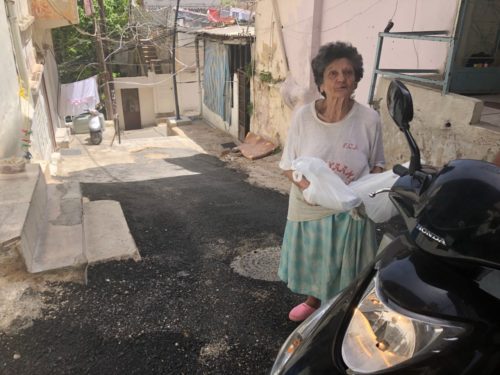 This woman *Maria* lives alone. Her husband died a while ago and she has no children. She is all alone. Her and her Ethiopian neighbor try to help each other. She is very old and lives on a large hill. After getting up the hill she needs to rest before taking the stairs into her house. She hoards trash, as throwing anything away when she has so little, seems like an overwhelming idea.
We also spoke to a man named *Youssef* He wears his jacket year round because He has no home to leave it in. His brother lets him stay inside at night, but not in his home, only in the staircase. He collects trash for the surrounding buildings and brings them to the dumpster to earn the small amount of cash that the residents give him.
There is a small shop that Triumphant Mercy hopes to make into a small coffee shop and a place to serve lunches in order to generate income to help fund the feeding of the poor. There is a university near by, and we hope that students will find it a place to get a quick lunch or a coffee knowing they are helping something bigger.
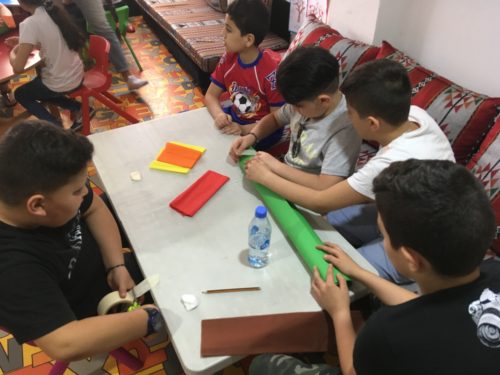 In Bekaa Valley, Lebanon, we work with local partners to provide education for around 500 Syrian refugee children. Most of these children are living in informal settlements on the border and are provided with child-friendly education in tent schools. We support the training of Syrian refugees as teachers, so the children can learn within their own culture and feel a sense of safety and familiarity.
One of the schools for refugees is based in a thriving Community Centre, run by our partners in Beirut. It caters for both Syrian and Iraqi refugees and not only provides education, but is a hub for the wider support of the refugee communities and the Lebanese poor.
Project leader Nuna Matar says “Life is difficult in the refugee settlements, but refugees in Beirut face huge difficulties too. There are people living on rooftops and in garages, they have no facilities, they can’t send their children to school and face a lot of discrimination”.
Over 100 children attend educational classes at the Centre, studying English, Arabic, maths, art and computers. It also provides psycho-social classes for around 300 children, vocational training and adult education. There are monthly clothes distributions and computer lessons for all ages to enable learning and contact with relatives back in Syria and Iraq.
Noora fled her city in Iraq where her husband worked in a restaurant, when it was surrounded by ISIS. They first fled to the north of the country with their three children, witnessing people killed around them and enduring a four hour journey on foot. “Everyone was afraid”, says Noora, ”we left with nothing at all. The children still remember this day and have nightmares”. After a month or so they made the trip to Beirut to find safety.
“Life is very difficult in Beirut. I worry about my children as there are no doctors and medication is too expensive. My husband has found work in construction but not enough for the rent, which is for two small rooms. With my parents, there are now eight people in these rooms. I feel safer here but the children still play games about war and shooting, and we have no security for the future.”
Noora has registered for an English summer school at the Centre to give her more options in the years to come, and her children come along to the education classes. The Centre in Beirut is a lifeline for refugees like Noora. It is attended by around 800 people a day, with new registrations every week.
Find out more about the work we support in
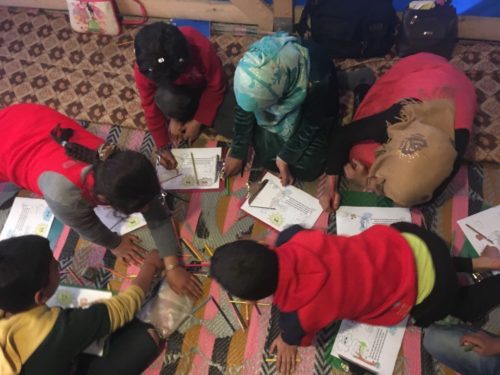 The Syrian refugee children we work with in Lebanon have fled war and conflict, seen their homes destroyed and their families attacked. To start to re-build their sense of wellbeing, it is vital that they start to regain a feeling of normalcy, and begin to recover from trauma in a safe space, with trusted adults.
The
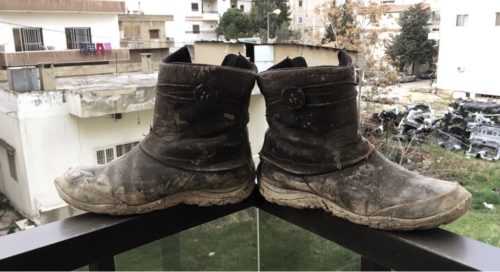 Lebanon (MNN) — The Syrian refugee camps in Lebanon are dusty part of the year and muddy the rest. It doesn’t matter if gravel is put down, or the fact that tents are on concrete slabs. If you go into a camp, you’re going to come out marked.
“I have this certain pair of boots that I wear to camp that are great. I’ve worn them so much in camp that they, I can’t clean them. I have washed them. I have tried to clean them and it’s just, the dirt’s permeated to them that they just are dirty and I track it everywhere and I go everywhere,” Triumphant Mercy’s *Jessica shares.
“And I’ve noticed that whenever I go into Lebanese stores, the grocery store, the bank, or a restaurant or somewhere with the boots, then Lebanese look down at my feet, they see my dirty boots, and they know that I’ve work in the refugee camps.”
The immediate response—why? Why pour your time into helping Syrian refugees?
Enter the long history between Lebanon and Syria, and the most recent war. There’s deep rooted tension built up on both sides, and it’s caused a division. Lebanon was under Syrian occupation for 29 years.
In 1976, Syria entered Lebanon during the Lebanese civil war. Syria’s presence in the country was meant to be a part of an Arab peacekeeping plan. With that said, things didn’t exactly go as planned. When it was time for Syria to withdraw over a two-year period, the country kept its presence in Lebanon another 15 years. Finally, in 2005 Syria left Lebanon.
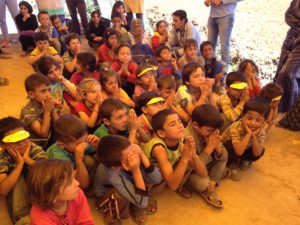 Lebanon (MNN) – Is there really power in prayer? Triumphant Mercy is working with and prays for refugees in Lebanon and they say yes.
“It’s amazing how God just turns hearts,” Triumphant Mercy’s Nuna says.
“This is our prayer actually. We pray for that. We pray that hearts would be opened because it cannot be us. It’s not us who can do it. We have to open hearts and give a revelation of the Father, give a revelation of who Jesus is, and we cannot reveal anything. We can just do the act, but the revelation in the heart cannot be done by us. We need the Holy Spirit every day.”
Triumphant Mercy workers have shown love to refugees by providing food and supplies and building relationships.
The ministry recently took refugee women to a park. Nuna says it cost very little, but the women were full of joy.
“Bringing joy is something that is a privilege. Seeing that we can bring joy with anything, which is a small act of love. And I think this is what it is. It’s just loving people. It’s just showing people that we care.”
Recently, Nuna says God sent the ministry a volunteer who only wanted to distribute food. She says she hadn’t expected this, but “I believe God really knows the need and just brings them at the right time in the right place.”
While many aid organizations have given food, Nuna says Triumphant Mercy doesn’t give refugees food and leave. Instead, they stay or come back so they can build relationships.
They work and live alongside refugees. Because of this, they’re seeing people’s hearts opening to the Word of God. They’re seeing hope and encouragement that is taking root.
“This is amazing just to be able to live life with people.” Nuna says ‘living life’ with the people is simply showing them love.
“I just come and smile or offer a prayer. It’s love. So, love has so many different ways of showing, of being displayed. It can be done by just an act, it can be done by thanks, it can be done by a smile.”
These acts of love have stirred the question ‘why’ in refugees’ hearts and minds. Refugees are asking Triumphant Mercy workers why they stay, treat them with love, and want to build relationships with them.
“Just a why can open a wide conversation… because we have something to share because we have somebody in us who is Jesus Christ who wants to love through us. So, we can just share who we have in us,” Nuna says.
“Somebody who has a physical need and we say let’s pray about that. Somebody who has a worry about her, we pray about that. So, it just shows interest and shows we care and shows practically that we’re here.
One of the ways the ministry is enabled to pray for each person is through their health clinic. They offer services to refugees and pray for every patient.
“Every person that comes in the clinic, we pray for them, pray for that God would touch them, or heal them, or do something. And people come, sometimes they really don’t have any physical illness. They just come for the prayer.”
Refugees in Lebanon need your help whether that’s by praying for them, contributing financially, or going to serve alongside them.
Your prayers aren’t empty. They make a difference and these refugees are coveting your prayers of healing and encouragement.
Pray the Lord would continue changing hearts in refugee camps and open doors for Triumphant Mercy to share His Gospel.